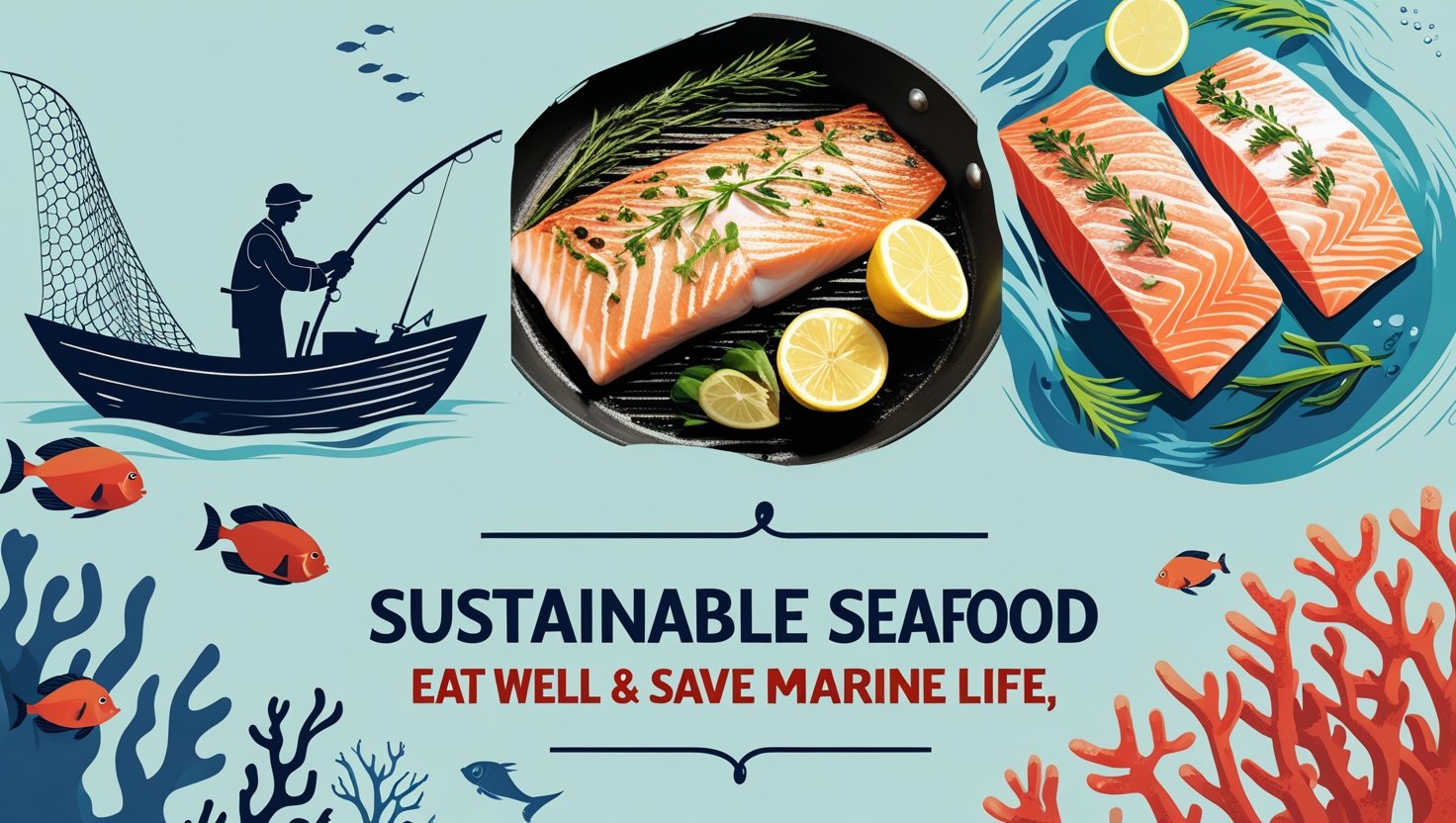
Sustainable Seafood | Eat Well & Save Marine Life
Your dinner plate holds the power to save entire ocean ecosystems. Every time you choose fish at the grocery store or order seafood at a restaurant, you’re casting a vote for the future of marine life. While overfishing threatens to empty our oceans, sustainable seafood choices offer a delicious solution that lets you enjoy incredible flavors while protecting underwater worlds for generations to come.
The Ocean’s Silent Emergency Room:
Beneath the waves, marine ecosystems are fighting for survival in ways most people never see. Overfishing has pushed numerous fish populations to the brink of collapse, creating underwater ghost towns where vibrant communities once thrived. Industrial fishing practices strip entire food webs bare, leaving behind ecological deserts that struggle to recover.
The numbers tell a sobering story. Scientists estimate that large predatory fish populations have declined by 90% since the 1950s, while commercial fishing fleets have expanded their reach to previously untouched ocean regions. Trawling nets scrape across seafloors like underwater bulldozers, destroying coral reefs and marine habitats that took centuries to develop.
Bycatch represents another devastating consequence of unsustainable fishing methods. For every pound of target fish caught, commercial operations often discard multiple pounds of “unwanted” species back into the ocean, usually dead or dying. Sea turtles, dolphins, sharks, and countless other marine creatures become collateral damage in the pursuit of popular fish species.
The ripple effects extend far beyond individual species. When key predators disappear from marine food chains, entire ecosystems shift in unpredictable ways. Jellyfish populations explode without natural predators, algae blooms suffocate coastal waters without enough herbivorous fish to control them, and coral reefs bleach without the diverse communities of fish they depend on for nutrients and protection.
Your Fork as a Conservation Tool:
Sustainable seafood consumption transforms everyday meals into powerful conservation actions. When consumers consistently choose responsibly caught fish, they create market demand that rewards fishing operations using environmentally sound practices. This economic pressure drives industry-wide changes more effectively than regulations alone.
The health benefits of ocean-friendly seafood extend beyond environmental impact to personal wellness advantages. Fish caught using sustainable methods often contain higher levels of omega-3 fatty acids, fewer contaminants, and better nutritional profiles because they come from healthier marine environments where fish can follow natural feeding patterns and life cycles.
Local fishing communities benefit tremendously when consumers support responsible fishing practices. Small-scale fishermen who use traditional, sustainable methods often struggle to compete with industrial operations. However, premium markets for sustainably caught seafood provide economic incentives that help preserve both fishing traditions and marine ecosystems.
The variety available through sustainable choices often surprises consumers accustomed to limited seafood options. Marine biodiversity flourishes when fishing pressure spreads across multiple species rather than concentrating on a few popular varieties. This distribution encourages consumers to explore new flavors while reducing pressure on overexploited fish populations.
Seasonal eating patterns emerge naturally when following sustainable seafood guidelines, connecting consumers with natural ocean cycles and local fishing seasons. This approach often results in fresher, more flavorful meals while supporting the natural reproduction cycles that maintain healthy fish populations.
Navigating the Maze of Marine Choices:
Understanding sustainable seafood labels requires learning a new language of certification programs and environmental assessments. The Marine Stewardship Council (MSC) blue label indicates independently verified sustainable fishing practices, while the Aquaculture Stewardship Council (ASC) label certifies responsibly farmed seafood operations.
Regional variations in sustainability make location-specific knowledge crucial for informed choices. Alaska’s well-managed salmon runs represent gold-standard sustainable fishing, while certain tuna species caught in specific ocean regions face critical population pressures. Seafood guides from organizations like the Monterey Bay Aquarium’s Seafood Watch provide region-specific recommendations that help consumers navigate these complexities.
The distinction between wild-caught and farmed seafood involves multiple sustainability considerations. Well-managed wild fisheries often provide the most environmentally friendly options, but responsible aquaculture operations can offer sustainable alternatives when wild populations face pressure. The key lies in understanding which farming methods minimize environmental impact while producing healthy fish.
Seasonal awareness transforms seafood shopping from a routine task into an educational experience. Many fish species have natural spawning seasons when fishing should be minimized to allow reproduction. Understanding these cycles helps consumers time their purchases to support rather than stress fish populations during critical life stages.
Traceability systems are becoming increasingly sophisticated, allowing consumers to track their seafood from ocean to plate. These systems provide transparency about fishing methods, vessel information, and supply chain details that enable truly informed purchasing decisions.
The Economics of Ocean Stewardship:
Sustainable fishing economics challenge traditional assumptions about food pricing and value. While sustainably caught seafood sometimes costs more initially, the long-term economic benefits include preserved fish populations, maintained fishing employment, and avoided environmental restoration costs that ultimately benefit entire communities.
Market incentives drive fundamental changes in fishing industry practices. When restaurants and retailers commit to sourcing only sustainable seafood, they create guaranteed markets for responsible fishing operations. This demand for security encourages fishermen to invest in sustainable gear and methods that might have higher upfront costs but provide long-term viability.
The tourism industry increasingly recognizes connections between healthy marine ecosystems and economic prosperity. Coastal communities that maintain vibrant underwater environments through sustainable fishing practices often develop thriving ecotourism sectors that provide alternative income sources for fishing families while creating additional incentives for marine conservation.
Insurance and investment sectors are beginning to factor environmental sustainability into their decision-making processes for fishing operations. Sustainable fishing businesses often qualify for better financing terms and insurance rates because they present lower long-term risks associated with resource depletion and regulatory changes.
Government support programs increasingly reward sustainable practices through subsidies, tax incentives, and preferential treatment in fishing license allocation. These policy shifts reflect growing recognition that supporting sustainable operations provides better long-term economic returns than subsidizing unsustainable practices that deplete resources.
Technology Meets Tradition in Ocean Conservation:
Innovation in sustainable fishing technology combines cutting-edge science with time-tested traditional methods to create more effective conservation solutions. GPS tracking systems help fishing vessels avoid sensitive habitats and spawning areas, while advanced sonar technology reduces bycatch by allowing more precise targeting of desired species.
Blockchain technology enables unprecedented seafood traceability, creating tamper-proof records that follow fish from catch to consumer. This transparency helps eliminate illegal fishing products from supply chains while allowing consumers to verify the sustainability claims of their seafood purchases with smartphone apps and QR codes.
Artificial intelligence systems analyze fishing patterns, ocean conditions, and fish population data to optimize sustainable fishing operations. These tools help fishermen maximize catches of abundant species while avoiding areas and times when vulnerable populations might be encountered, improving both economic and environmental outcomes.
Traditional ecological knowledge from indigenous and local fishing communities increasingly informs modern conservation strategies. These time-tested approaches often provide sustainable solutions that modern science is only beginning to understand and document through formal research.
Genetic testing technology now allows rapid species identification that helps eliminate mislabeling and fraud in seafood markets. This capability ensures that conservation-minded consumers actually receive the sustainable species they think they’re purchasing while helping enforce regulations designed to protect vulnerable fish populations.
Building Tomorrow’s Ocean Abundance:
The future of marine conservation depends on scaling successful sustainable seafood programs to global levels while maintaining the local knowledge and community engagement that makes them effective. Technology platforms are emerging that connect consumers directly with sustainable fishing operations, creating transparent supply chains that benefit both ocean health and fishing communities.
Climate change adaptation strategies increasingly integrate sustainable fishing practices with broader ocean conservation efforts. Resilient marine ecosystems supported by sustainable fishing practices show better ability to adapt to changing ocean conditions, while depleted ecosystems struggle to respond effectively to environmental pressures.
Education initiatives are expanding to include sustainable seafood awareness in school curricula, culinary training programs, and public health campaigns. This comprehensive approach creates informed consumers who understand connections between their food choices and environmental outcomes, supporting market demand for sustainable options.
International cooperation on fisheries management continues evolving toward ecosystem-based approaches that consider entire marine food webs rather than managing individual species in isolation. These comprehensive strategies recognize that ocean health depends on maintaining complex relationships between multiple species and their habitats.
Conclusion:
Sustainable seafood represents more than an environmental choice, it’s an investment in ocean abundance that benefits marine life, fishing communities, and future generations. Every meal becomes an opportunity to support fishing practices that work with natural systems rather than against them. The path forward requires informed consumers, responsible fishing operations, and innovative solutions that prove environmental protection and economic prosperity can flourish together in our relationship with the sea.
FAQs:
1. What makes seafood sustainable?
Sustainable seafood comes from fisheries that maintain healthy fish populations and minimize environmental impact through responsible fishing methods.
2. How can I identify sustainable seafood when shopping?
Look for MSC blue labels, ASC certification, or use smartphone apps like Seafood Watch to check sustainability ratings before purchasing.
3. Are farmed fish better than wild-caught for the environment?
It depends, well-managed wild fisheries are often best, but responsible aquaculture can provide sustainable alternatives when wild stocks need protection.
4. Does sustainable seafood cost more money?
Sustainable seafood sometimes costs more initially, but supports long-term ocean health and often provides better nutritional value and taste.
5. Which types of fish are generally most sustainable to eat?
Sustainable options include Alaskan salmon, Pacific sardines, farmed mussels, and pole-caught tuna, though recommendations vary by region and season.
6. How does my seafood choice impact marine ecosystems?
Your choices create market demand that either rewards sustainable fishing practices or supports destructive methods that harm ocean environments and fish populations.